

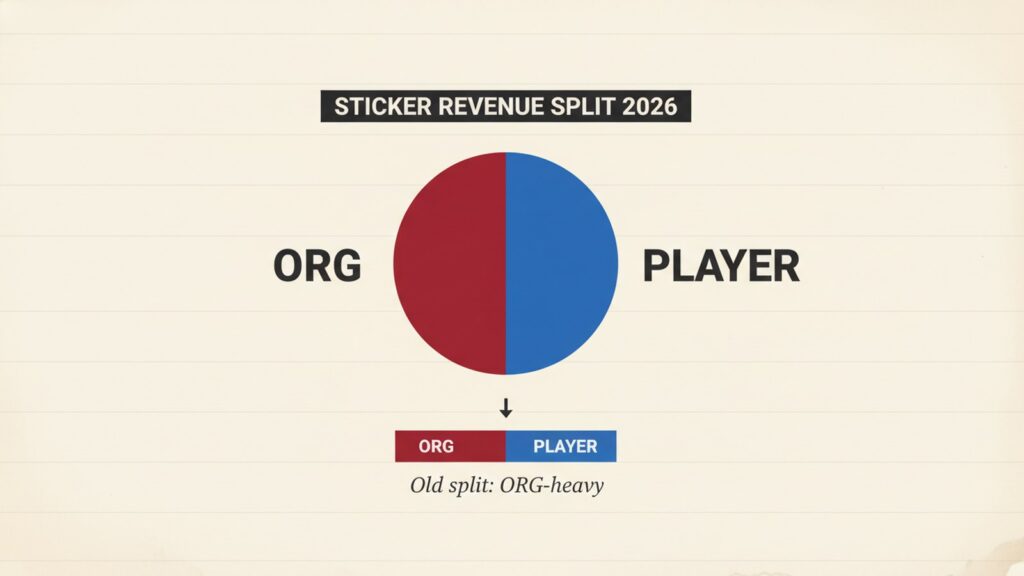
The biggest off-stage story of the IEM Cologne Major 2026 cycle isn’t a roster move — it’s the revenue side of Valve’s overhauled sticker economy. On the latest HLTV Sticker Fans Come Here episode, 100 Thieves’ Graham ‘messioso’ Pitt — Head of Counter-Strike Operations — joined hosts Danish ‘Nohte’ Allana and Harry ‘NER0’ Richards to walk through exactly how the new system reshapes the org-player split.
The headline change
Historically, many player contracts allocated a percentage of organisation-wide sticker revenue. Under Valve’s revised structure, players now receive a more direct share of sticker earnings — which fundamentally changes how organisations calculate compensation and negotiate future agreements.
Why pre-existing contracts matter
messioso flagged that the contract layer is the actual fault line. Existing org-player agreements were written against the old revenue-share model. Suddenly shifting the income source from ‘org takes a slice, redistributes to player’ to ‘player receives direct cut’ creates real double-counting risk and potential org-player conflicts unless contracts are renegotiated.
The Cologne timing
Cologne is the first Major under the revised structure, which is why the conversation matters now. messioso’s framing: the new system is structurally healthier for players in the long run, but the contract-overhang period between now and the next round of agreements is where most of the friction will surface.
