

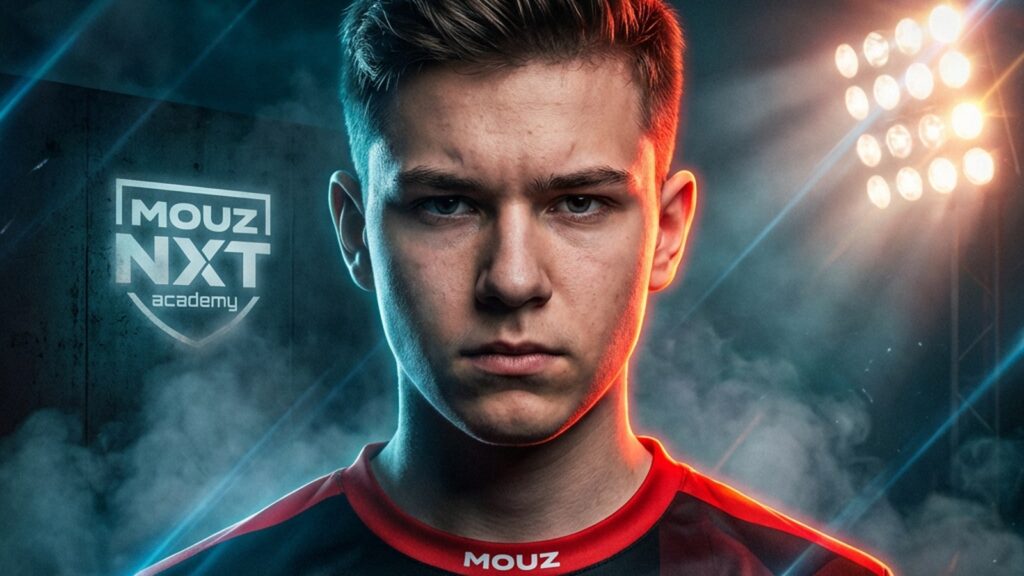
MOUZ have committed to a radical tactical experiment, abandoning traditional anchor roles whilst simultaneously betting their future on youth development. The German organisation is implementing an “anchorless” system that prioritises fluid, aggressive positioning over static defensive setups.
This strategic pivot follows their disappointing exit at BLAST Open Copenhagen, which ended an impressive run of 17 consecutive playoff appearances under coach Dennis “sycrone” Nielsen. The failure prompted immediate roster surgery, continuing sycrone’s pattern of bold mid-season adjustments.
Academy Investment Pays Dividends
Central to this rebuild is the promotion of 17-year-old Adrian “xelex” Vincze from MOUZ NXT, their highly successful academy programme. The move exemplifies the organisation’s faith in their development pipeline, which has consistently produced tier-one ready talent.
Meanwhile, Ludvig “Brollan” Brolin and Jimi “Jimpphat” Salo have been benched to accommodate the changes. Justinas “jL” Lekavicius joins on loan, whilst Dorian “xertioN” Berman assumes in-game leadership responsibilities in a comprehensive internal restructure.
High-Risk, High-Reward Philosophy
The anchorless approach demands exceptional adaptability and individual initiative from every player. Rather than relying on dedicated site anchors, MOUZ will deploy more dynamic rotations and aggressive positioning. This system suits younger players who typically excel in mechanical duels and fast-paced scenarios.
MOUZ’s recent history validates such gambling instincts. Previous controversial decisions—removing Nathan “NBK-” Schmitt and Jon “JDC” de Castro, temporarily benching Kamil “siuhy” Szkaradek—initially drew criticism but ultimately strengthened the roster’s competitiveness.
Defensive Vulnerabilities Loom
However, significant risks accompany this tactical revolution. Abandoning traditional anchor roles can expose defensive weaknesses against well-drilled opponents who exploit predictable rotations. Additionally, heavy reliance on inexperienced players introduces volatility that could prove costly in crucial matches.
The timing adds pressure, with key international tournaments approaching rapidly. MOUZ must demonstrate that their tactical innovation and youth-focused philosophy can deliver immediate results whilst building long-term success.
This latest gamble represents both continuation and escalation of MOUZ’s aggressive roster management. Rather than simple player replacement, they’re fundamentally reimagining their Counter-Strike philosophy. Whether this ambitious experiment yields another success story or marks a rare strategic misstep will depend entirely on execution under tournament pressure.
