

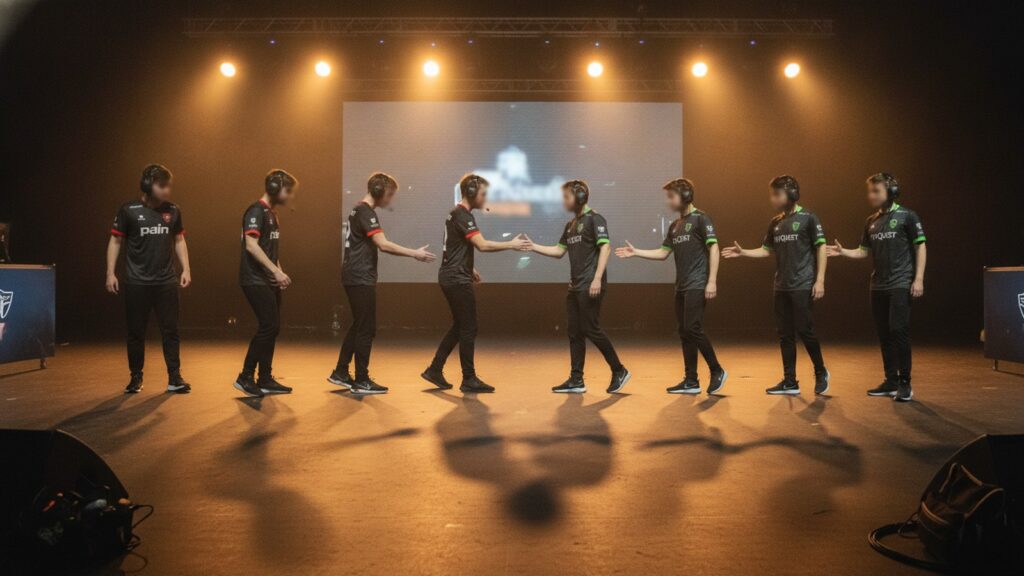
paiN Gaming have extended their IEM Cologne Major 2026 run by eliminating FlyQuest in a high-pressure Stage 2 elimination match. The Brazilian squad ended the Australian-led side’s tournament campaign — and kept their own ambitions of a deep Major run alive heading into a crucial advancement Bo3 next.
The elimination-match stakes
The matchup carried significant weight on both sides. FlyQuest needed the win to continue a campaign that jks had publicly framed as the team’s ‘earn-tier-1-back-through-results’ test ahead of the Major. paiN needed the win to avoid the kind of early exit that would have undone months of structural progress for the Brazilian project. Both sides arrived at the match with their entire Cologne narrative on the line.
How paiN took the series
The Brazilian roster delivered the more composed Bo1, capitalising on key rounds and maintaining control in the crucial moments where elimination-match variance usually breaks one side or the other. Led by in-game leader Rodrigo ‘biguzera’ Bittencourt and supported by a lineup with proven ability to produce individual impact across the server, paiN’s decision-making was clean from the opening rounds. The win also continued a positive H2H trend in Brazilian-vs-FlyQuest meetings — paiN had previously beaten the Australian-led side in international competition.
What it means for paiN
For paiN this is more than survival. The organisation entered Cologne aiming to prove itself against the world’s elite — paiN have been one of Brazil’s most active Tier 2-Tier 1 transition projects of 2026, and a Major-stage win against a known European/Australian roster validates the structural work. The next advancement Bo3 is the test that matters: a win opens the Stage 3 conversation; a loss ends the Major arc with the survival win as the only scoreboard footprint.
The biguzera factor
biguzera’s calling has visibly stabilised paiN’s round-loss-recovery pattern across 2026. Brazilian Counter-Strike fans tracking the project will have recognised the FlyQuest-match shape immediately — early adversity absorbed cleanly, mid-round adjustments feeding the next round’s setup, and clutch responsibility distributed across multiple players rather than concentrated on a single star. The result is a roster that’s now structurally credible in elimination-match scenarios.
FlyQuest’s Major exit
For FlyQuest the result is the cleanest possible test of the jks framework. The Australian veteran’s pre-Major interview had explicitly placed the burden on results — and the Stage 2 elimination loss is the kind of scoreboard footprint that the framework structurally needs to answer for. The project goes back to the Tier 2 grind with the same brief: win at the events they’re invited to, then convert the form into Tier 1 returns. The Cologne exit doesn’t change the framework but does extend the timeline for the next visible breakthrough.
The Stage 2 advancement read
The paiN-FlyQuest result fits the broader Stage 2 pattern — structural rosters absorbing high-variance opponents under elimination pressure. With B8’s comeback over GamerLegion, FUT’s perfect 3-0, and Spirit’s parallel 3-0 path, the Stage 2 bracket has rewarded sides that converted preparation into scoreboard rather than chasing individual-form upside. paiN now enter the advancement Bo3 with exactly that shape — one good Bo3 from Stage 3 access and the biggest result of the Brazilian project’s year.
