

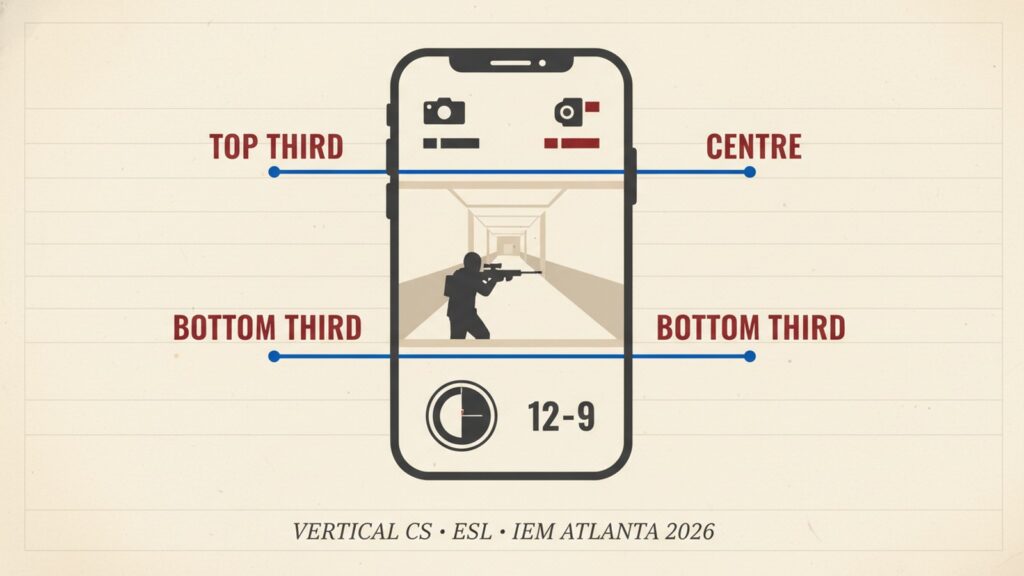
ESL has quietly built something more useful than a cropped broadcast for TikTok. During IEM Atlanta 2026 coverage, viewers on TikTok saw a vertical-first layout built specifically for phone screens — not a 16:9 feed sliced in half, but a layout that uses the extra vertical real estate to surface context normally reserved for the desktop experience.
What goes in the top and bottom thirds
Player cameras. Radar. Scoreboard elements. Round-state visuals around the bomb. The central in-game action stays focused; the top and bottom thirds become a second context layer. Result: information density without forcing the viewer to rotate their phone, with the core gameplay still recognisable.
The unexpected upside: reactions
One of the more entertaining side effects is the visibility of players after they die. On a standard broadcast, post-death moments are often lost unless the director cuts to a camera. In ESL’s vertical version, reactions stay in frame: frustration, instant comms, the thousand-yard stare after a missed duel. Those are the moments that make pro CS feel human — and they’re now part of the default viewing experience.
The right format flexibility
Rotate the phone and the broadcast returns to a landscape presentation closer to Twitch. TikTok gets a native mobile feed; Twitch viewers aren’t forced into a gimmick. For CS — where information density is the casual-viewer hurdle — this experiment is changing how much of the broadcast layer can fit into the way people already watch short-form video. Not the game itself; the way it’s presented.